

- What is PCE inflation and why does the Fed watch it?
- What surprised economists in the October PCE inflation report?
- How does a Fed rate hike affect car buyers, businesses and jobs?
- Is the US economy strong enough to handle higher interest rates?
- What should investors watch at the December Fed meeting?
- What could keep interest rates high in 2027?
- Which investments could be most affected by higher interest rates?
- What should stock investors track beyond the next Fed decision?
Imagine a family in America planning to buy a car on a loan. A higher interest rate could make its monthly payments more expensive. Now imagine a company that borrowed money cheaply a few years ago but needs to replace that loan in 2027. For both, the biggest worry may not be the next interest rate hike, but how long borrowing remains expensive.
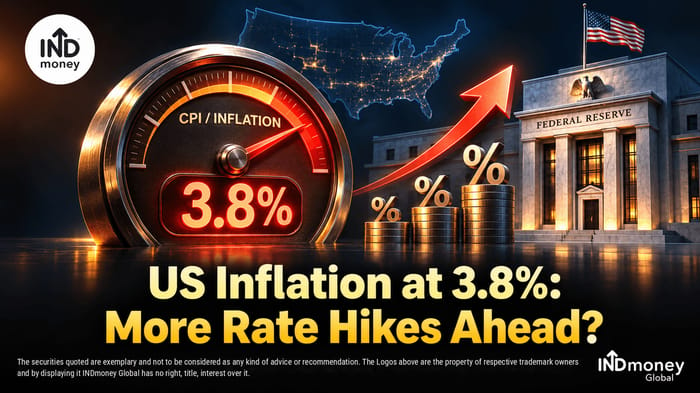
On November 25, 2026, the US released its October PCE inflation report. Annual inflation reached 3.8%, while core inflation rose to 3.3%. Financial markets were already largely expecting a quarter-percentage-point interest rate hike in December and market pricing reported on November 25 also pointed to another increase in January.
The question now is whether the Federal Reserve can bring inflation down quickly enough to avoid keeping borrowing costs high throughout much of 2027.
What is PCE inflation and why does the Fed watch it?
Imagine that a basket of goods and services cost $100 in October last year. If its price increased at the latest annual PCE inflation rate of 3.8%, it would cost $103.80 this October. That is a simple way to understand inflation: the same amount of money buys less than before.
PCE stands for Personal Consumption Expenditures. Its price index measures changes in the prices of goods and services purchased by US households or on their behalf, including groceries, healthcare, housing and transport. It also reflects changes in spending patterns as consumers switch between products.
The Fed looks at two measures:
- Headline PCE inflation: Includes all categories, including food and energy.
- Core PCE inflation: Excludes food and energy because their prices can change sharply, making it easier to identify underlying inflation trends.
The Fed's longer-run inflation target is 2%, measured using overall PCE inflation, not core PCE alone. Core inflation helps officials understand whether price pressures are likely to persist.
At 3.8%, headline inflation is 1.8 percentage points above that target. Bringing inflation back to 2% would mean prices rising more slowly, not necessarily returning to their earlier levels.
Sources: BEA PCE price index definitions and October 2026 release; Federal Reserve, Chairman Warsh's August 28, 2026 Jackson Hole remarks.
What surprised economists in the October PCE inflation report?
The biggest surprise in the October inflation report was that prices of goods and services, excluding food and energy, rose faster than economists had expected. This measure, known as core PCE inflation, helps the Fed understand whether price pressures are becoming more persistent across the economy.
Here is how the actual inflation figures compared with market expectations:
| Inflation measure | Actual | Expected |
| Headline PCE (monthly) | 0.3% | 0.3% |
| Headline PCE (annual) | 3.8% | 3.8% |
| Core PCE (monthly) | 0.3% | 0.3% |
| Core PCE (annual) | 3.3% | 3.2% |
Sources: BEA October 2026 Personal Income and Outlays report, CME Group/Econoday and Reuters.
Is inflation slowing down or rising?
The answer depends on which part of inflation we look at.
- Overall inflation: Prices increased by 0.3% in October, compared with 0.5% in September. This means the pace at which overall prices are rising has slowed.
- Core inflation: Prices continued to rise by 0.3% for the second consecutive month. Meanwhile, annual core inflation increased from 3.1% in September to 3.3% in October.
This tells us that while overall price increases have slowed recently, inflation beyond food and energy remains stubborn.
Why is this concerning for the Federal Reserve?
A monthly price increase of 0.3% might sound small. However, imagine a basket of goods and services costing $100 today. If its price continued rising by 0.3% every month, the same basket would cost approximately $103.66 after a year.
That translates into an annual price increase of roughly 3.7%, considerably above the Fed's long-term inflation target of 2%.
For the Fed, one month of slower overall inflation is therefore not enough. It needs to see prices rising more slowly over several consecutive months before it can become confident that inflation is moving sustainably towards its target.
How does a Fed rate hike affect car buyers, businesses and jobs?
The Fed sets a target range for a short-term interest rate used in the financial system. Changes in that rate influence the cost of borrowing across the economy, although banks do not necessarily change every loan rate by the same amount.
Consider a family borrowing $30,000 to purchase a car, with a fixed-rate loan repaid over five years.
| Loan details | At 6% interest | At 7% interest |
| Loan amount | $30,000 | $30,000 |
| Monthly repayment | $579.98 | $594.04 |
| Total interest over five years | $4,799.04 | $5,642.16 |
Author calculations using standard monthly loan amortisation, excluding fees and taxes.
The higher rate adds about $14 a month and $843 over the life of the loan. Some families may decide to delay their purchase or choose a cheaper car. If enough customers do the same, dealerships may sell fewer vehicles and postpone hiring or opening new stores.
This is not merely a theoretical concern. The Federal Reserve's November Beige Book, which collects observations from businesses across the country, reported softer car sales linked by business contacts to higher interest rates and fuel costs. It also described weaker housing activity and construction facing higher borrowing expenses.
Higher rates can reduce demand and help ease inflation, but they also risk slowing business activity and employment. That is why the Fed must consider both prices and jobs when deciding how long to keep rates high.
Is the US economy strong enough to handle higher interest rates?
The US economy performed strongly between July and September, but the latest consumer spending figures suggest that households are becoming more cautious. This presents a challenge for the Federal Reserve as it considers keeping interest rates high.
| Economic indicator | Period | Latest reading |
| US GDP growth (annualised) | July-September 2026 | 4.3% |
| Consumer spending | October 2026 | Up 0.3% |
| Consumer spending after adjusting for inflation | October 2026 | Unchanged |
Sources: BEA, November 25 GDP second estimate and October 2026 Personal Income and Outlays report.
What does strong GDP growth tell us?
US GDP growth for the July-September quarter was revised upwards from 3.4% to 4.3% on an annualised basis, supported by stronger business investment and consumer spending.
This means the economy performed better than initially estimated. Such economic strength gives the Fed more room to fight inflation through higher interest rates without necessarily pushing the economy into an immediate slowdown.
Why is consumer spending becoming a concern?
Although Americans spent 0.3% more in October than in September, they did not consume significantly more goods and services after accounting for rising prices.
Imagine a household spending $1,000 on its monthly essentials in September and $1,003 in October for roughly the same quantity of products. Its spending has increased, but its actual consumption has not.
This matters because if households continue paying more without purchasing more, businesses may struggle to increase sales volumes, expand operations and create new jobs.
Is the slowdown visible across the US economy?
The Federal Reserve's November Beige Book, which gathers information from businesses across the country, showed that economic activity expanded in eight of its twelve districts, while the remaining four reported no change.
The challenge for the Fed is that strong past economic growth gives it room to keep interest rates high, but weaker recent spending suggests that households may already be feeling the pressure. Employment and consumer spending data will therefore become particularly important in determining how long interest rates can remain elevated without significantly weakening the economy.
What should investors watch at the December Fed meeting?
Financial markets were already largely expecting the Federal Reserve to raise interest rates by 25 basis points (0.25 percentage points) in December, following the latest PCE inflation report.
| Interest rate scenario | Fed interest rate range |
| Current interest rate | 3.75%-4.00% |
| After a possible December rate hike of 25 basis points | 4.00%-4.25% |
While a larger rate hike remains possible, the bigger question for investors is whether the Fed will continue raising rates in 2027 or keep them unchanged at elevated levels.
Which upcoming economic reports could influence the Fed's decision?
Before deciding on interest rates, the Fed will receive fresh employment data. However, the next CPI inflation report will arrive after the December policy decision.
| Event | Date | Why it matters |
| US employment report | December 4 | Shows whether businesses are still hiring despite higher borrowing costs. |
| Fed interest rate decision | December 10, 12:30 AM IST | Reveals whether the Fed raises interest rates. |
| Kevin Warsh's press conference | December 10, 1:00 AM IST | Provides clues about future interest rate decisions. |
| US CPI inflation report | December 10, 7:00 PM IST | Helps shape expectations for the Fed's January meeting. |
Strong employment figures could give the Fed more confidence to keep interest rates high. However, weaker hiring could make officials more cautious about further increases, even if inflation remains elevated.
Why is the Fed's 2027 interest rate projection particularly important?
Alongside its December decision, the Federal Reserve will release its updated dot plot, a chart showing where Fed officials individually believe interest rates should be at the end of the coming years.
Here is what the Fed projected in September:
| Period | Median interest rate projection |
| End of 2026 | 4.1% |
| End of 2027 | 4.1% |
| Long term | 3.2% |
Source: Federal Reserve, September 16, 2026, Summary of Economic Projections, Table 1.
The September projections suggested that interest rates could remain elevated throughout 2027, with limited room for reductions by the end of the year.
If the Fed raises its 2027 projection in December, it would indicate that officials now believe higher interest rates may be necessary to control inflation. However, even an unchanged projection does not rule out further hikes, as the Fed could raise rates early in 2027 and reduce them later.
This makes Fed Chair Kevin Warsh's press conference equally important. His comments could help investors understand whether the Fed intends to continue raising interest rates or give its previous hikes more time to bring inflation under control.
For investors, the December rate hike is only one part of the story. The more important development will be whether the Fed signals that expensive borrowing could persist for longer than previously expected.
What could keep interest rates high in 2027?
Even if the Fed stops raising interest rates, borrowing costs will remain high until it decides to cut them. How soon that happens will largely depend on two factors: how quickly inflation cools and how well the US job market holds up.
Before its January 26-27, 2027, meeting, the Fed will receive several important economic reports.
| Release date | Economic data |
| December 10, 2026 | November CPI inflation |
| December 23, 2026 | November PCE inflation |
| January 8, 2027 | December employment data |
| January 13, 2027 | December CPI inflation |
| January 26–27, 2027 | Fed policy meeting |
Sources: BLS economic release calendar, BEA and Federal Reserve 2027 meeting schedule.
How could these economic reports influence interest rates?
| Economic conditions | Possible Fed response |
| High inflation and strong hiring | Another rate hike becomes more likely. |
| Falling inflation and strong hiring | The Fed could keep rates unchanged. |
| High inflation and weakening hiring | The Fed faces a difficult choice between controlling inflation and protecting jobs. |
| Sustained decline in inflation and weakening employment | The possibility of rate cuts increases. |
As of November 25, financial markets were anticipating another rate hike in January. However, these expectations could change as new economic data becomes available.
For borrowing costs to come down sustainably in 2027, the Fed will need sufficient evidence that inflation is under control or that economic weakness warrants a rate cut. Until then, even a pause in rate hikes would offer limited relief to households and businesses facing expensive loans.
Which investments could be most affected by higher interest rates?
Higher interest rates do not affect every business in the same way. While some companies face higher borrowing costs, others may struggle because their customers have less money to spend.
1. Companies with large amounts of debt
Companies often take new loans to repay existing ones when they become due. If interest rates remain high, these new loans can be more expensive.
Imagine a company that needs to replace an existing $1 billion loan with a new one.
| Particulars | Existing loan | New loan |
| Loan amount | $1 billion | $1 billion |
| Interest rate | 4% | 6% |
| Annual interest expense | $40 million | $60 million |
| Additional annual expense | Not Applicable | $20 million |
The company now has to spend an additional $20 million every year on interest, leaving less money for profits, business expansion and other expenses. Companies with variable-rate loans could feel this pressure even sooner.
2. Companies whose customers depend on loans
Businesses selling cars, houses and other expensive products often depend on customers who borrow money to make purchases.
When interest rates rise, monthly loan repayments become more expensive. Some customers may postpone their purchases, resulting in fewer sales for car manufacturers and homebuilders.
This means a company can suffer from higher interest rates even if it has very little debt of its own.
3. Growth and technology stocks
Many growth companies are valued based on the profits they are expected to generate several years from now.
When interest rates rise, investors can potentially earn better returns from relatively safer investments such as government bonds. They may consequently become less willing to pay high prices for companies whose expected profits are several years away.
This can put pressure on technology and growth stock valuations, particularly when their earnings growth fails to meet expectations.
Why did US bond yields fall despite expectations of a Fed rate hike?
Interestingly, the US 10-year Treasury yield fell even as investors anticipated a December interest rate hike.
| Date | US 10-year Treasury yield |
| November 24, 2026 | 4.91% |
| November 25, 2026 | 4.85% |
Source: US Treasury daily par yield curve rates.
This happens because the Fed determines short-term policy rates, while long-term bond yields depend on what investors expect to happen to inflation, economic growth and interest rates in the coming years.
For example, investors may expect a rate hike in December but also believe that expensive borrowing could eventually slow the economy and lead to rate cuts. Such expectations can bring long-term bond yields down, although they do not necessarily explain this particular day's decline.
Bond prices and yields generally move in opposite directions. Therefore, even when the Fed is expected to raise interest rates, existing fixed-rate bonds can gain value if their market yields fall.
What should stock investors track beyond the next Fed decision?
For any company I follow, I would open its latest quarterly report and look at the debt maturity schedule. How much borrowing needs to be renewed in 2027, and how much of its debt has a variable interest rate? Then I would check whether its customers typically need loans to purchase its products.
For a company exposed to both risks, several months of expensive credit could matter more to earnings than a single quarter-point hike. Comparing management's interest expense and sales forecasts after the December meeting can help establish whether the market's rate expectations are beginning to affect the business itself. The December decision sets a starting point; the subsequent financial results will show how much that starting point matters.