

- How different is MAGP from a Magnificent Seven ETF, MAGS?
- What does MAGP include and what is actually open to investors?
- How does MAGP access Anthropic and OpenAI without owning their shares?
- Why add Broadcom, SpaceX, Anthropic and OpenAI?
- What do these companies' latest valuations mean for MAGP investors?
- What changes if Anthropic or OpenAI completes an IPO?
- What costs and trading risks matter beyond the headline fee?
- Author’s take: What should investors check before deciding where MAGP fits?
OpenAI and Anthropic are still private, but a newly launched ETF already offers exposure to both. The crucial detail is how that exposure works.
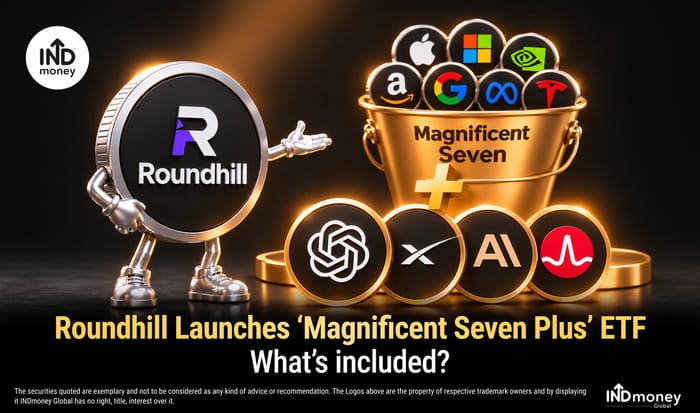
Roundhill launched the Magnificent Seven Plus ETF (MAGP) on November 12, 2026, bringing eleven technology businesses into one fund. It retains the traditional Magnificent Seven and adds Broadcom, SpaceX, Anthropic and OpenAI. However, MAGP does not own shares in the two private AI companies. It accesses them through financial contracts linked to indexes of pre-IPO perpetual futures.
That opens a different route to their price movements. It also makes the starting valuation, the fund’s actual allocation and its eventual transition after an IPO essential to understanding the opportunity.
How different is MAGP from a Magnificent Seven ETF, MAGS?
MAGS is Roundhill’s ETF focused on the original Magnificent Seven, while MAGP adds Broadcom, SpaceX and exposure linked to Anthropic and OpenAI.
Adding four companies means MAGP allocates less to each of the original seven. MAGS targets approximately 14.3% per company at rebalancing, compared with around 9.4%-9.7% each in MAGP’s disclosed portfolio. Together, the original seven represent 67.3% of MAGP. Broadcom and SpaceX account for 19.2%, while the index-linked exposure to Anthropic and OpenAI contributes 13.4%.
MAGP could outperform MAGS if the additions deliver stronger returns, but it could lag if the original seven perform better, after accounting for costs.
More companies do not necessarily mean much broader diversification. Several still depend on the same AI spending cycle. Investors who already own technology stocks or funds should check whether MAGP adds the exposure they want or increases holdings they already have.
What does MAGP include and what is actually open to investors?
MAGP itself is listed and trading on Cboe BZX, a major U.S. financial exchange operated by Cboe Global Markets. Nine of its eleven company exposures relate to publicly traded businesses; Anthropic and OpenAI remain private as of November 13.
The original seven are Alphabet, Amazon, Apple, Meta Platforms, Microsoft, NVIDIA and Tesla. MAGP adds the following exposures without removing any of them:
| Company or group | Disclosed exposure | What investors access through MAGP |
| Original Magnificent Seven, combined | 67.28% | Listed-company exposure |
| Broadcom | 9.63% | Listed-company exposure |
| SpaceX | 9.55% | Listed-company exposure |
| OpenAI | 6.72% | Swap linked to a pre-IPO futures index |
| Anthropic | 6.66% | Swap linked to a pre-IPO futures index |
Sources: Roundhill’s MAGP fact sheet, marked November 12, 2026.
Before either private company lists, their combined exposure is capped at 15% of the fund’s net assets, divided approximately equally between them. The remaining exposure is spread approximately equally across the nine listed companies. MAGP rebalances quarterly to maintain its intended allocations.
SpaceX already trades under SPCX, following its June IPO. Anthropic expects to price its IPO on November 18 and begin trading on November 19 under ANT, subject to regulatory clearance. OpenAI has no confirmed public trading date in the sources reviewed.
Buying MAGP provides indirect exposure to Anthropic, but does not give investors an allocation of its IPO shares.
How does MAGP access Anthropic and OpenAI without owning their shares?
MAGP uses financial contracts called swaps to gain exposure to price movements linked to Anthropic and OpenAI. It does not buy shares in either private company.
The arrangement works in three steps:
- Traders buy and sell contracts linked to each company. These are called perpetual futures. They have no fixed expiry date, and their prices reflect traders’ expectations about the company’s value.
- BITA combines trading prices into an index for each company. These are the BITA Anthropic Perpetual Futures Index and BITA OpenAI Perpetual Futures Index.
- MAGP enters a swap with a financial institution tied to each index. The fund’s gain or loss depends on movements in that reference index, subject to the contract’s terms and costs.
If the relevant index rises, MAGP’s position generally benefits before costs. If it falls, the position can lose value. The fund receives investment exposure through a contract, rather than ownership rights in the private company.
This also explains why a funding announcement may not produce an equivalent gain for MAGP. Private investors agree on a valuation when they fund a company, while traders continuously price the futures used by the indexes. These markets can reflect different expectations and move differently.
Source: MAGP’s November 10, 2026 prospectus, including its pre-IPO index methodology and derivative disclosures.
Why add Broadcom, SpaceX, Anthropic and OpenAI?
The additions extend the portfolio into businesses that the original seven-stock basket does not directly own. Their relevance comes from different parts of the technology economy.
Broadcom adds a larger position in custom AI chips and networking. For its fiscal third quarter ended August 2, 2026, Broadcom reported AI semiconductor revenue of $16.7 billion, up 221% year on year. That makes the addition commercially meaningful: it gives the fund exposure to another supplier earning substantial revenue from AI infrastructure.
Broadcom’s business also differs from owning only the companies buying that infrastructure. MAGP can hold both the buyers and another supplier, although their fortunes can still depend on the same spending cycle.
SpaceX adds satellite connectivity, launch services and an AI business. Its inclusion reflects an expansion beyond the familiar cloud, advertising and consumer technology companies. Since it is already public, this part of MAGP offers access to an existing traded stock rather than a future listing.
Anthropic and OpenAI add dedicated AI developers. Their products can compete with, supply or operate alongside those of the established technology companies. Including them makes the fund’s exposure broader within the AI industry, while also bringing in businesses whose access and valuation work differently from ordinary listed shares.
Sources: Broadcom’s September 2, 2026 earnings release.SpaceX’s company profile and Roundhill’s MAGP launch announcement.
What do these companies' latest valuations mean for MAGP investors?
MAGP brings together companies whose valuations come from different markets. Broadcom and SpaceX have publicly traded shares, while Anthropic’s proposed IPO terms and OpenAI’s private financing provide different reference points.
| Company | Valuation information | What investors should understand |
| Broadcom | Approximately $1.74 trillion at the November 12 US close | Public-market value of outstanding shares |
| SpaceX | Approximately $1.90 trillion at the November 12 US close | Public-market value following its listing |
| Anthropic | Preliminary IPO range of 70-78 per share, implying approximately 1.26-1.41 trillion on a fully diluted basis | Proposed terms that include potential shares from options and other awards |
| OpenAI | Reported private financing valuation of $1.25 trillion in November | A private transaction valuation, rather than MAGP’s derivative entry price |
Sources: Stock Analysis and Yahoo Finance; Anthropic’s November 10 filing; Financial Times, November 11; Wall Street Journal and Reuters financing coverage. Public-market values are rounded snapshots at November 12, 2026, 4 p.m. EST.
A note on Anthropic’s valuation: At the assumed $74 IPO midpoint, its post-offering basic share count implies approximately $968.4 billion. The higher fully diluted figures include additional potential shares. The difference reflects how shares are counted, rather than a sudden change in the offer price.
The terms are still developing. Bankers were reportedly considering an Anthropic valuation of $1.5 trillion or more, while OpenAI’s reported financing valuation was below its earlier $1.4 trillion target. These figures should remain clearly distinguished from final IPO pricing.
For MAGP’s returns, what matters is whether a company delivers more or less than the market already expects. An IPO above the company’s last funding valuation could still disappoint if traders had anticipated an even higher price.
That makes the entry price essential: access to a promising business does not automatically mean access at an attractive valuation.
What changes if Anthropic or OpenAI completes an IPO?
The fund’s stated plan is to replace the relevant pre-IPO index swap with publicly traded shares or swaps referencing those shares when it becomes eligible to invest. The transition is therefore conditional on an actual listing and investment eligibility.
Before either IPO, combined exposure to the two private-company references is capped at 15% of net assets. They are approximately equally weighted, with the remaining exposure spread approximately equally across the nine listed companies. The portfolio is rebalanced quarterly.
After an IPO, the strategy calls for equal weighting across all portfolio companies. If the eleven-company lineup remains unchanged, that implies approximately 9.09% per company. Exposure to a company that remains private continues through its pre-IPO index swap and remains subject to the applicable cap.
This means an Anthropic listing could change more than the instrument used to access Anthropic. Reweighting could also change the allocation to OpenAI while it remains private. Investors following the IPO should therefore examine MAGP’s updated holdings after the transition, rather than assume the launch portfolio stays intact.
What costs and trading risks matter beyond the headline fee?
MAGP’s annual expense ratio is 0.35%, but that does not cover every cost investors may face. For an investment that stays at $10,000, the stated fee works out to approximately $35 a year, deducted within the fund.
The prospectus says costs built into its swap contracts are excluded from this fee figure. These costs can reduce returns further.
Could you pay more than the underlying holdings are worth?
Yes. An ETF’s trading price can differ from its net asset value, or NAV, which is the calculated value of its assets minus liabilities, per share.
For example, suppose MAGP’s NAV is $100 per share, but its market price is $102. You would be paying 2% more than its calculated underlying value. If that extra demand fades and the trading price returns to $100, you could lose $2 per share even if the underlying value stays unchanged.
There is also a bid-ask spread, the gap between the price available to buyers and the price available to sellers. A wider gap makes entering and exiting the investment more expensive.
What extra risks come with the swaps?
Two risks matter:
- The reference price may differ from the eventual stock price. MAGP’s Anthropic and OpenAI exposure follows futures-based indexes. When either company lists, its shares could trade below the value those markets had anticipated.
- The financial institution could fail to pay. MAGP relies on the institution on the other side of each swap to meet its contractual obligations. A failure could cause losses for the fund.
Since MAGP has just launched, investors cannot yet assess these effects through a long performance record. The practical checks are its trading price versus NAV, bid-ask spread and latest holdings, alongside the stated annual fee.
Source: MAGP prospectus, fee footnotes and principal risk disclosures.
Author’s take: What should investors check before deciding where MAGP fits?
Start with the exposure you actually want. Someone interested mainly in Anthropic and OpenAI should compare that objective with their combined launch allocation of roughly 13.4%. Most of the fund’s exposure lies elsewhere, so even a strong move in one AI company may have a limited effect on the whole investment.
Then, compare MAGP with your existing holdings. List the technology companies you already own directly and through funds and work out whether MAGP adds a desired business or simply increases an existing concentration. This is particularly relevant when the new fund’s most familiar names are already among your largest positions.
For the private-company portion, keep the valuation test separate from the access decision. Check the reference instrument and its pricing basis, then compare new funding or IPO information on the same share-count basis. A larger headline valuation is not, by itself, evidence that the investment available today offers more upside.
The next concrete checkpoint is Anthropic’s expected pricing and listing. Compare the final terms with the preliminary filing, then inspect how MAGP changes its instrument and allocation. That gives investors evidence to assess the fund’s transition from a pre-IPO reference to public-market exposure, instead of making the decision solely on the appeal of owning eleven famous names in one ticker.