

- What Is the Nvidia-Nokia AI-RAN Partnership?
- How Does Nvidia and Nokia's AI-RAN Technology Work?
- What Are Nvidia and Nokia Bringing to AI-RAN?
- What Has Nvidia CEO Jensen Huang Said About AI-RAN and Telecom?
- Why Would Telecom Operators Adopt AI-RAN?
- AI-RAN Economics: Can Telecom Operators Actually Save Money?
- Could AI-RAN Genuinely Revolutionise Telecom?
- How Big Is Nvidia's AI-RAN Revenue Opportunity?
- What Does Nvidia's AI-RAN Partnership Mean for Nokia Stock?
- Where Is the Investment Opportunity in AI-RAN?
- The Five Signals That Would Prove This Is Becoming A Real Business
- Author’s Take
The next big location for artificial intelligence may not be a hyperscale data centre. It may be the unremarkable equipment cabinet beside a cell tower. Nokia now says eight more telecom operators are advancing trials of its Nvidia-powered AI-RAN platform, but the real story is more nuanced than “GPUs are going into towers.”
If the technology works economically, it could turn radio networks from fixed-function infrastructure into programmable computing platforms. That could matter far more to Nokia’s business mix than to Nvidia’s enormous revenue base, at least in the first few years.
Let’s break down what Nvidia and Nokia are building, how AI would actually work inside a mobile network, where the financial benefit could appear and what investors need to see before treating AI-RAN as a commercial revolution rather than an impressive telecom trial.
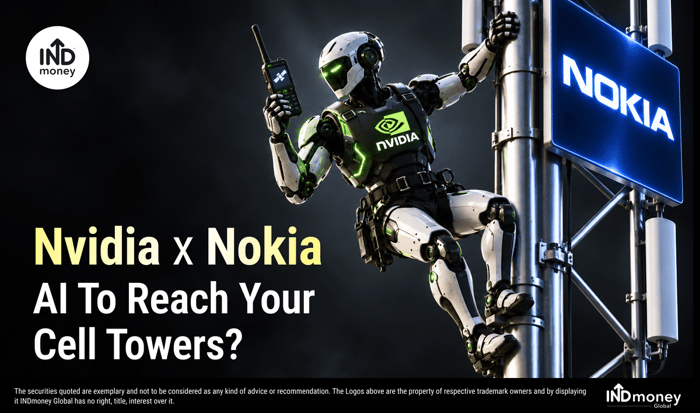
What Is the Nvidia-Nokia AI-RAN Partnership?
On September 16, 2026, Nokia said A1 Group, Chunghwa Telecom, du, e&, Mobily, stc, TPG Telecom and Zain Saudi were advancing proofs of concept or live field trials using Nokia’s AI-RAN platform and Nvidia’s Aerial RAN Computer. Nokia also said earlier work with operators including T-Mobile, SoftBank, Indosat Ooredoo Hutchison and NTT DOCOMO was continuing.
Nvidia and Nokia announced their strategic partnership in October 2025. Nvidia subsequently invested $1 billion for 166.39 million new Nokia shares at $6.01 each, giving it about 2.9% of the company. Nokia launched its commercial AI-native RAN platform in July 2026, so the latest update shows progress from partnership to broader operator evaluation.
| Milestone | What happened | Why it matters |
| October 2025 | Nvidia and Nokia announced an AI-RAN partnership | Established the technical and commercial relationship |
| November 2025 | Nvidia completed its $1 billion Nokia investment | Aligned the companies financially as well as technically |
| July 2026 | Nokia launched its commercial AI-RAN platform | Created a product roadmap rather than only a research project |
| September 2026 | Eight named operators advanced trials | Broadened evidence of operator interest across several regions |
| 2026 to 2027 | Pilots are expected before commercial availability | Starts the real-world test of network economics |
A proof of concept shows that a system can work, while a field trial tests it under live traffic and radio conditions. Neither automatically becomes a nationwide contract. The next meaningful milestone is a paid deployment with disclosed economics and evidence of expansion after the trial.
How Does Nvidia and Nokia's AI-RAN Technology Work?
A radio access network, or RAN, connects your phone to the mobile operator. It includes radios and antennas at or near cell sites, plus baseband computing that processes signals and allocates network resources. Traditional RAN equipment relies heavily on specialised hardware and predefined algorithms.
AI-RAN changes the computing layer. Nokia supplies its anyRAN software, radio expertise and integration with existing AirScale and Open RAN-compatible equipment. Nvidia supplies accelerated computing, CUDA software and the Aerial platform. Depending on the network design, the computing can sit at a cell site, at an aggregation point serving several sites or in a more centralised location. “AI in cell towers” is therefore a useful shorthand, but it does not mean a large data-centre GPU is bolted to every antenna.
Think of a traditional mobile network as a city using fixed traffic-light schedules. The lights work, but they respond imperfectly when a concert ends, a road closes or thousands of people arrive at a stadium. AI-RAN is closer to a traffic control system that studies live movement, predicts congestion and continually changes signal timing. The roads are the operator’s spectrum. AI does not create more roads, but it may allow more traffic to travel through them.
The industry generally separates the opportunity into three layers:
| AI-RAN layer | What it means | Simple example | Possible economic benefit |
| AI for RAN | AI improves the radio network itself | Better beamforming, scheduling and interference control | More capacity from existing spectrum |
| AI and RAN | Radio and AI workloads share accelerated infrastructure | Compute shifts between network processing and AI applications | Higher utilisation of installed compute |
| AI on RAN | Operators run edge AI services close to users and devices | Video analytics, robotics or industrial inference near the site | A possible new service revenue stream |
The first layer is the most tangible. AI can estimate changing radio channels, direct signals, allocate resources and reduce interference. Nokia says its platform has already produced more than 20% spectral-efficiency improvement. It targets 50% by 2027 and more than 100% by 2028. A network with 100 units of usable capacity could therefore reach more than 120, 150 and eventually over 200 units if those gains survive commercial deployment.
The other layers are more ambitious. Nvidia says shared AI-RAN infrastructure can improve utilisation by two to three times because the same computing can support radio functions and AI applications. Spare capacity could run edge inference when network demand is lower.
What Are Nvidia and Nokia Bringing to AI-RAN?
The companies solve different parts of the problem. Nvidia contributes accelerated computing, CUDA, networking, simulation tools and the Aerial software stack. Its Aerial RAN Computer family combines GPU-based processing, BlueField data-processing units, Spectrum networking and telecom-specific timing.
Nokia contributes anyRAN software, radio and baseband integration, telecom intellectual property and operator relationships. Its platform offers three adoption routes, including an expansion option for existing AirScale deployments and a cloud RAN alternative. This matters because operators rarely replace an entire national network for a new architecture.
Dell Technologies is one of the server partners supporting Nokia’s AI-RAN platform, while T-Mobile US is among the operators evaluating the technology. These companies participate in the ecosystem, but their financial exposure is different. Dell supplies infrastructure, while T-Mobile would primarily benefit if the system lowers its cost per bit or creates services customers will pay for.
What Has Nvidia CEO Jensen Huang Said About AI-RAN and Telecom?
When Nokia unveiled the platform in July 2026, Nvidia CEO Jensen Huang called RAN “the next AI infrastructure.” He said the partnership was bringing CUDA and AI into the baseband and turning RAN into a “planet-scale AI computer.” In his vision, telecom networks become distributed computers that improve radio performance and run AI close to where data is created.
This fits Nvidia’s broader strategy of extending CUDA from data centres into networking, vehicles, robotics and edge computing. Telecom is another large computing estate that has historically used specialised silicon. Making accelerated computing a standard radio platform would extend CUDA into infrastructure connecting billions of devices.
Still, investors should interpret Huang’s language as a strategic vision rather than a revenue forecast. Nvidia does not separately disclose AI-RAN revenue and its current financial engine remains the data centre. In the quarter ended July 26, 2026, Nvidia generated $96.2 billion in revenue, of which $89.0 billion came from Data Center. AI-RAN is therefore an option on another compute market, not the central explanation for Nvidia’s present earnings.
Why Would Telecom Operators Adopt AI-RAN?
The clearest benefit is spectrum efficiency. If software carries more data through the spectrum an operator already controls, it may postpone physical capacity additions and lower the cost per gigabyte. The value should be greatest in dense, congested cells rather than areas where demand remains below installed capacity.
Energy is another important part of the equation. The GSMA has estimated that the RAN accounts for about 73% of a mobile operator’s network energy use. AI can place equipment into low-power states, coordinate neighbouring cells and allocate power more intelligently. The catch is that accelerated computing also consumes electricity. A successful system must reduce total energy per unit of traffic, not merely make the radio algorithm smarter while shifting a larger power bill into the compute cabinet.
Low-latency edge computing is more speculative. Factories, ports and smart-city applications may need computer vision or machine decisions closer to the source than a distant cloud can provide. Operators already own distributed sites and connectivity, so those sites could earn revenue from computing as well as data transport.
It is not yet a proven mass-market model. Cloud providers offer edge services, enterprises can install private infrastructure and operators have struggled to turn network capabilities into high-margin digital platforms. The technology can succeed while the profit pool goes elsewhere.
AI-RAN Economics: Can Telecom Operators Actually Save Money?
AI-RAN becomes commercially compelling only when four sources of value exceed four sources of cost.
| Operator value | Operator cost |
| Avoided or delayed spectrum and capacity spending | Accelerated-compute hardware |
| Lower energy and network operating cost | Electricity, cooling and site upgrades |
| Better service quality and lower customer churn | Software subscriptions and integration |
| Revenue from edge AI services | Cybersecurity, model maintenance and operational risk |
A useful way to assess any future deployment is:
AI-RAN economic value = avoided capacity cost + operating savings + incremental service gross profit - compute cost - software cost - integration and energy cost
The 20% spectral-efficiency result is encouraging, but it is not the same as a 20% financial return. A congested urban operator may place high value on 20% more capacity. An operator with spare spectrum may value the same technical gain far less. The economic result will vary by geography, traffic density, spectrum position and the age of the installed network.
This is also why the announced software subscription model matters for Nokia. A recurring stream tied to software upgrades could improve revenue visibility and potentially carry better margins than one-off hardware refreshes. For an operator, however, the subscription is attractive only if performance gains persist after accounting for extra computing and power.
Could AI-RAN Genuinely Revolutionise Telecom?
Yes, but only if it clears three gates.
1. The first is technical: AI must deliver reliable improvements across weather, mobility patterns, device mixes and radio environments, not just in selected trials. Mobile networks carry emergency calls and critical services, so an unpredictable model cannot be treated like an ordinary consumer application.
2. The second gate is economic: Operators need a measurable reduction in cost per bit, delayed capacity spending or a service with paying customers. Expensive, underutilised compute may merely move costs rather than remove them.
3. The third gate is ecosystem adoption: Operators want interoperability and multiple suppliers, while Nvidia benefits when CUDA becomes the common platform. Nokia says its solution is Open RAN compliant and works with existing infrastructure, but customers will still test portability, security and dependence on one computing ecosystem.
The International Telecommunication Union expects final 6G radio-interface standards by 2030. Nokia’s opportunity cannot wait for that label. The platform must create value in 5G and 5G-Advanced first, then offer a software path towards 6G.
AI-RAN has a realistic chance of becoming important in dense mobile networks. The claim that every site will become a profitable edge AI factory is far less certain. Network optimisation is the nearer-term business, while distributed AI services are the larger but harder prize.
How Big Is Nvidia's AI-RAN Revenue Opportunity?
Nvidia and Nokia cited Omdia’s estimate that the broader RAN market could exceed $200 billion cumulatively through 2030. That headline sounds large, but it is not all new spending and it will not all flow to Nvidia. The table below is an original sensitivity model, not company guidance. It asks what Nvidia-linked revenue could look like under different adoption and value-capture assumptions.
| Scenario | Share of $200 billion RAN spend using AI-RAN | Nvidia-linked share of AI-RAN system value | Cumulative revenue pool through 2030 | Average annual pool | Share of Nvidia’s current annualised revenue |
| Cautious | 10% | 10% | $2.0 billion | $0.3 billion | 0.1% |
| Meaningful adoption | 25% | 15% | $7.5 billion | $1.3 billion | 0.3% |
| Rapid adoption | 50% | 20% | $20.0 billion | $3.3 billion | 0.9% |
The model divides the cited 2025 to 2030 market estimate across six years and compares it with Nvidia’s $384.8 billion simple annualised revenue. It excludes possible edge AI application revenue. Because 2025 has already elapsed, this is a scale test rather than an estimate of the remaining market. The point is that Nvidia is now so large that even rapid telecom adoption may initially add less than 1% to its present revenue base.
AI-RAN still expands CUDA into critical infrastructure, increases edge-computing demand and reinforces Nvidia’s networking business. For Nvidia’s stock, those platform effects are more important than the first years of direct RAN sales.
What Does Nvidia's AI-RAN Partnership Mean for Nokia Stock?
The potential financial effect is more direct for Nokia. Its Mobile Infrastructure division generated €2.68 billion of Q2 2026 net sales, about 56% of group revenue, and a comparable operating margin of 11.6%. AI-RAN can help Nokia defend radio market share, attach recurring software revenue and give operators a reason to modernise without discarding their entire installed base.
Nokia also has a second AI opportunity outside radio. Its Network Infrastructure division generated €2.04 billion of Q2 sales and includes IP and optical products used in data centres. Nokia said sales to AI and cloud customers more than doubled year on year in Q2, while AI and cloud order intake reached €2.8 billion. Roughly half of those orders were expected to convert into revenue over the following 12 months. Investors should not confuse that existing data-centre momentum with AI-RAN revenue, which is still at the pilot stage, but the two opportunities give Nokia more than one path into the AI infrastructure buildout.
At about 8:52 UTC on September 17, 2026, Nvidia traded near $213.90 with a market value of approximately $5.19 trillion, while Nokia’s US-listed shares traded near $10.14 with a market value of about $56.0 billion. These were pre-market snapshots and can change quickly. At $10.14 per Nokia share, Nvidia’s 166.39 million-share position was worth roughly $1.69 billion, about 69% above its original $1 billion subscription value.
That gain is financially immaterial beside Nvidia’s $5.19 trillion market value, but the 2.9% stake is a strong strategic signal for Nokia. It gave Nokia capital, aligned its roadmap with the dominant AI computing platform and helped the market view it as more than a mature telecom-equipment company. The risk is that Nokia’s valuation can re-rate before AI-RAN produces material revenue. Its Q2 reported operating result was a €50 million loss because of restructuring even though comparable operating profit reached €434 million. Execution still matters more than the label attached to the product.
Where Is the Investment Opportunity in AI-RAN?
The profit pool will not be distributed evenly. Nvidia has broad platform exposure, but Nokia has greater company-specific sensitivity because radio is central to its business and subscriptions could change revenue quality. Nokia is also more exposed if deployments are delayed or operators prefer another architecture.
| Part of the value chain | How value could be created | What investors should monitor |
| Nvidia | Accelerated compute, CUDA, networking and orchestration | Platform adoption, disclosed telecom revenue and competing silicon |
| Nokia | AI-RAN software, radios, integration and subscriptions | Trial conversions, contract size, recurring revenue and segment margins |
| Server and hardware partners | Telecom-grade systems and deployment infrastructure | Order volumes, margins and concentration |
| Operators | Lower cost per bit, delayed capacity spending and edge services | Total cost of ownership and paying edge customers |
| Tower owners | Additional hosting, power or site requirements | Contract structures rather than AI branding |
Tower companies deserve special caution. Many primarily lease space and physical infrastructure, so they do not automatically own the RAN software, compute or edge applications. Their opportunity becomes meaningful only if new equipment increases tenancy, power revenue or demand for site upgrades under favourable contracts.
The cleanest exposure will belong to the company that captures recurring economics after deployment, not the one that mentions AI-RAN most often. Nvidia offers a diversified platform option and Nokia offers more concentrated operating leverage. Operators may capture the largest savings where spectrum and capacity are genuinely constrained.
The Five Signals That Would Prove This Is Becoming A Real Business
First, trials must convert into paid commercial deployments. Second, operators need to expand beyond one city or a limited cluster of sites. Third, Nokia should begin disclosing AI-RAN revenue, backlog or software subscription metrics. Fourth, real-world spectral and energy gains need to remain strong after total compute costs are included. Fifth, operators must identify at least one edge AI service that generates revenue rather than only demonstrating technical possibility.
Until those signals appear, the September announcement should be treated as evidence of widening interest, not proof of mass adoption. Eight newly named operators improve the probability that Nokia has built something the industry wants to test. They do not yet tell investors what those operators will spend.
Author’s Take
AI-RAN is one of the more credible attempts to bring AI outside data centres because it starts with a real and expensive problem: mobile networks need to carry more traffic without endlessly acquiring spectrum or replacing hardware. A demonstrated 20% efficiency gain is meaningful. A 100% gain would be transformative if Nokia can reproduce it across commercial networks at an acceptable total cost.
The stock conclusions are different for the two companies. For Nvidia, telecom is another long-duration extension of CUDA and accelerated computing, but the numbers suggest it is still optionality beside a $96.2 billion quarterly revenue machine. For Nokia, AI-RAN can influence the core radio business, support recurring software economics and strengthen a broader repositioning towards AI and cloud infrastructure. It is the more sensitive exposure, but also the one carrying more execution risk.
The best way to think about the theme is simple: do not count towers, count converted contracts. Do not count theoretical capacity alone, measure total cost per bit. And do not assume the company providing the most visible hardware captures the largest profit. The revolution begins only when operators can show that intelligence in the network produces better economics, not merely better demonstrations.