

- What Exactly Happened?
- Why The Government Shutdown Happened?
- What’s Impacted And What Isn’t By Government Shutdown
- What to Watch Next
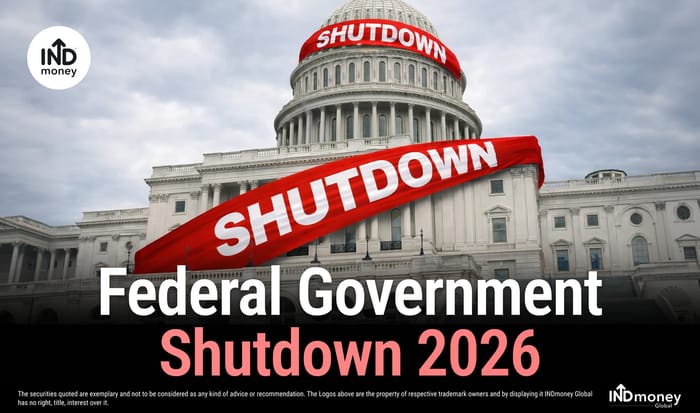
Just as millions of Americans were beginning their week, another storm hit Washington, not of snow or sleet, but of political gridlock. On the night of January 30-31, 2026, the US federal government entered a partial shutdown after lawmakers failed to finalize funding for the 2026 fiscal year. For the second time in six months, appropriations for a chunk of federal departments lapsed at 12:01 a.m. Eastern, leaving key agencies in limbo, federal workers facing uncertainty, and markets and citizens watching tensely from afar.
This time, the standoff isn’t just about dollars and cents, it’s about deeper disagreements over immigration enforcement, oversight reforms, and the shape of future public policy.
Let’s break down with this blog what’s happening, why the shutdown occurred, what’s at stake, and what we should be watching next.
What Exactly Happened?
In a typical year, Congress must pass 12 appropriations bills to fund every part of the federal government. Earlier in January, lawmakers had already passed half of those bills, but six remained unresolved ahead of the fiscal deadline of January 31, 2026.
Unlike in many past years, there was momentum, leaders in the Senate and the White House had hashed out a compromise funding package that would move most of the remaining bills forward and included a temporary two-week extension for the Department of Homeland Security (DHS).
But a timing problem proved critical. The Senate passed this agreed package late Friday evening, but the House of Representatives was out of session and scheduled to return on February 2. Because the House couldn’t vote before the midnight deadline, funding lapsed for multiple agencies. Even though many federal functions will continue under previously approved appropriations, dozens of departments are now technically in a partial shutdown until Congress acts.
Why The Government Shutdown Happened?
The immediate spark for the standoff was a controversial shift in funding negotiations tied to immigration enforcement, especially funding for DHS and its agencies like Immigration and Customs Enforcement (ICE) and Customs and Border Protection (CBP). Prior to the deadline, Democrats in the Senate said they would no longer support new DHS funding unless certain reforms to immigration enforcement agencies were included. This position hardened after the shootings of two US citizens in Minneapolis during Department of Homeland Security enforcement operations, which ignited public outrage and legislative pushback.
Democratic leaders, including Senator Chuck Schumer, outlined demands such as mandatory body cameras for immigration agents, banning face coverings during operations, and judicial warrants for searches, arguing these were “common-sense reforms.” When these conditions weren’t reflected in the funding bill, Democrats withheld support in the Senate, leading to a last-minute decision to separate DHS funding from the rest of the package and extend it only for two weeks instead of a full year.
That compromise passed the Senate, but without the House in session to return it to the floor before the deadline, the lapse in funding was unavoidable.
What’s Impacted And What Isn’t By Government Shutdown
Unlike a total shutdown that halts most federal activity, this one is partial. It affects departments whose funding was not already secured or approved through earlier appropriations actions, including Defence (certain operations), Transportation, Labor, Education, and parts of the Treasury. Some agencies that continue to operate include Veterans Affairs, Agriculture, Justice, and others that are already funded through separate measures.
Crucially, major benefit programs like Medicare, Social Security, and SNAP nutrition assistance typically continue during a partial shutdown because they have statutory funding or were covered by prior appropriations.
Federal workers in affected departments may be furloughed or required to work without immediate pay. Past shutdowns, particularly the record-long 43-day shutdown in late 2025, showed how disruptive such lapses can be, furloughing hundreds of thousands and slowing services that citizens and businesses rely on.
What to Watch Next
Here’s what’s on the near-term horizon:
- House Action: The House returns on February 2 to take up the Senate-approved funding package. Whether it clears committee and makes it to the floor in time will determine how long the shutdown lasts.
- DHS Negotiations: The two-week extension for DHS funding creates a negotiation window. Lawmakers must reconcile differing visions for immigration enforcement reform before then.
- Broader Impacts: Even a short shutdown can delay grant programs, slow regulatory actions, and create uncertainty for contractors and states that depend on federal dollars.
For everyday citizens and investors alike, this political drama isn’t just about abstract budgeting. Federal funding affects markets, government services, public confidence, and the economy at large. Like all shutdowns, the longer the stalemate continues, the higher the risk of ripple effects that reach into corners of daily life Americans might not expect.
Disclaimer:
The content is meant for education and general information purposes only. Investments in the securities market are subject to market risks, read all the related documents carefully before investing. Past performance is not indicative of future returns. The securities quoted are exemplary and are not a recommendation. This in no way is to be construed as financial advice or a recommendation to invest in any specific stock or financial instrument. Readers are encouraged to verify the exact numbers and financial data from official sources such as company filings, earnings reports, and financial news platforms and to conduct their own research, and consult with a registered financial advisor before making any investment decisions. All disputes in relation to the content would not have access to an exchange investor redressal forum or arbitration mechanism. INDmoney Global (IFSC) Private Limited,Registered office address: Office No. 507, 5th Floor, Pragya II, Block 15-C1, Zone-1, Road No. 11, Processing Area, GIFT SEZ, GIFT City, Gandhinagar – 382355.