

- What’s Happening: The Transaction in Plain Terms
- Why JPMorgan Is Taking Over
- Why Goldman Sachs Is Giving It Up
- What the Players Have Said
- What This Means Going Forward
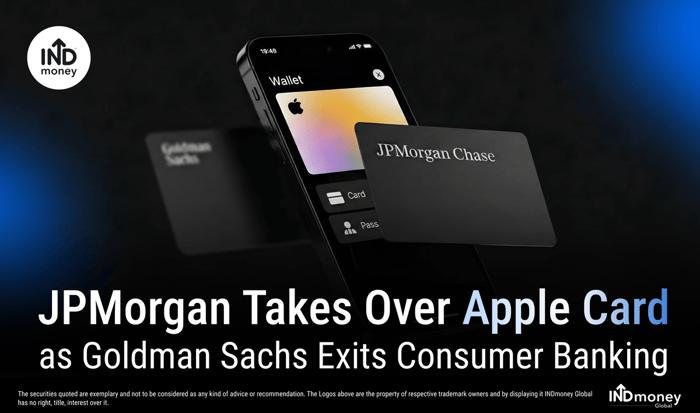
It’s one of those rare finance headlines that feels bigger than just two banks swapping portfolios. On January 7, 2026, JPMorgan Chase announced it had reached a definitive agreement with Apple to take over the Apple Card portfolio from Goldman Sachs, ending one of the most closely watched partnerships in consumer finance. What began in 2019 as an ambitious effort to reshape credit cards has now turned into a strategic pivot for all parties involved, with implications for banks, consumers and the broader credit card ecosystem.
At face value, the transition means JPMorgan Chase will step in as the new issuer of the Apple Card, taking over a credit card portfolio worth roughly $20 billion. JPMorgan will also underwrite a new Apple-branded savings product as part of the broader relationship, while Mastercard remains the payment network behind the card.
But beneath these headlines, the story is about contrasting strategic visions, bank strengths and weaknesses, and how each institution is repositioning itself for the next phase of financial services growth.
Let’s break down with this blog what this deal really entails, why it’s happening now, and what it signals for Apple Card, JPMorgan, Goldman Sachs and everyday cardholders.
What’s Happening: The Transaction in Plain Terms
JPMorgan Chase has agreed to become the new issuer of the Apple Card in a deal with Apple set to take about 24 months to complete and is subject to regulatory approvals. The portfolio being transferred holds more than $20 billion in outstanding balances.
For JPMorgan, this expands its already dominant position in the US credit card market. The bank already issues popular co-branded cards and consumer credit products. Integrating Apple Card, a product tied to one of the world’s most valuable technology brands, strengthens Chase’s consumer franchise even further.
Under the terms of the deal, JPMorgan expects to take a $2.2 billion provision for credit losses in its fourth-quarter 2025 earnings due to the forward purchase commitment on the loan portfolio. Analysts expect the deal to bring quality customers into the Chase ecosystem, offsetting this upfront accounting hit over time.
Goldman Sachs said the deal is expected to add 46 cents per share to its earnings when it reports results next week.
For Apple, the transition keeps the Apple Card experience intact for customers, including features like up to 3% Daily Cash back, in-app management, transparent spending tools and high-yield savings linked to the card, while partnering with a bank built to scale such offerings.
Why JPMorgan Is Taking Over
Under CEO Jamie Dimon, JPMorgan has leaned into consumer products as a core growth pillar, and this deal aligns perfectly with that blueprint. Owning the Apple Card, in addition to other co-branded offerings, expands Chase’s market reach and customer base, especially among a demographic that overlaps strongly with Apple device users.
JPMorgan’s balance sheet strength and sophisticated risk management also allow it to absorb the short-term credit provisions that come with a large and diverse loan book. In contrast, other banks approached by Apple earlier in the transition talks did not step forward or couldn’t match this scale.
Why Goldman Sachs Is Giving It Up
Goldman Sachs launched Apple Card in 2019 as a marquee product intended to help propel its consumer banking ambitions, anchored in the Marcus brand. Initially, it was seen as a bold move by a traditionally Wall Street-centric firm into the everyday wallet.
However, over the past few years, Goldman’s consumer efforts, including Apple Card, resulted in more losses than expected, particularly due to credit risk and elevated delinquencies among some cardholder segments. Some estimates put pre-tax losses in its consumer division in excess of $7 billion since 2020.
Rather than digging in deeper, Goldman strategically chose to recalibrate its business model, focusing more on its core strengths in investment banking, asset management and trading. Selling the Apple Card portfolio, even at a discount, allows it to crystallize some value and exit a lower-return business line that proved tougher to scale profitably.
What the Players Have Said
Apple emphasized continuity for cardholders and its commitment to innovation in financial services. The company said Apple Card has transformed how users think about credit and financial health, and it expects the transition to be “smooth and seamless” for customers.
JPMorgan Chase’s card unit leadership expressed excitement about expanding the partnership, noting that the bank’s scale and experience can help unlock new opportunities while preserving the card’s reputation for user-friendly features.
From Goldman Sachs, executives framed the decision as part of a broader strategy to withdraw from consumer banking, refocusing capital and talent on areas of higher strategic priority.
What This Means Going Forward
For consumers, the transition should be fairly invisible at first. Apple Card users can expect all current benefits to continue, card features to remain unchanged in the short term, and Mastercard’s network to stay in place. Any material changes, such as credit requirements, reward structures or pricing, are likely to be introduced gradually under JPMorgan’s governance.
For investors and market watchers, the deal underscores how scale, risk discipline and strategic focus matter in financial services. JPMorgan’s ability to absorb a large portfolio with disciplined underwriting contrasts with Goldman’s pivot away from mass consumer credit.
Finally, this switch highlights the broader evolution of fintech partnerships. Tech firms may design compelling products, but long-term success often depends on aligning with banks that have the balance sheet, risk systems and incentive structures to support them.
Disclaimer:
The content is meant for education and general information purposes only. Investments in the securities market are subject to market risks, read all the related documents carefully before investing. Past performance is not indicative of future returns. The securities quoted are exemplary and are not a recommendation. This in no way is to be construed as financial advice or a recommendation to invest in any specific stock or financial instrument. Readers are encouraged to verify the exact numbers and financial data from official sources such as company filings, earnings reports, and financial news platforms and to conduct their own research, and consult with a registered financial advisor before making any investment decisions. All disputes in relation to the content would not have access to an exchange investor redressal forum or arbitration mechanism. INDmoney Global (IFSC) Private Limited,Registered office address: Office No. 507, 5th Floor, Pragya II, Block 15-C1, Zone-1, Road No. 11, Processing Area, GIFT SEZ, GIFT City, Gandhinagar – 382355.